Introduction
In this Blog post I will be explaining the role of the distributor and how they decide when a film will be release, when and what marketing will be needed so that the film being promoted has as much publicity as it can, but making sure that the marketing is kept 'efficient'.
Distribution Plan
Every film has its own 'tailor-made' Distribution Plan. Distributors work close with the producers and the studios, and decide what would be the best time to release a film, depending on what the film's genre is and how the age of the film affects what audiences would be available at that certain times in the year. Deciding when a film would be released and how to release it is the most important strategic decision a distributor must make. This is important because the decisions made could decrease or optimize the chances of a film gaining profit. The decisions made are through the distributors' Market Knowledge, Statistical Research, Commercial Experience and Professional Judgement. The distributor gauge the audience for each film and set clear targets for the release.
The main things a distributor should consider, in order to optimize the films profit, are:
'Who can be convinced to buy a cinema ticket to see it and why should they do so? Can the film be positioned within a popular, recognizable genre? What sort of audiences have similar films attracted recently? When were they released?'
A distributor must also:
Launching films however can be expensive, and audiences have so many choices when they go to the cinema. Most films don't make profit on their theatrical runs alone. 'Conventional Wisdom' would not benefit a new release because ideas may not work as well as it did for other distributors.
Scripts and discussion with the filmmakers are early information that a distributor can glean on so that they have a small idea on what the film is about so that it can give them a guideline to how they are going to distribute the film. This is a one-off and is individually planned given under current circumstances. A final distribution plan may only be announced complete when the finished film is available to view.
The RISKS at which a distributor should be aware of are:
Audiences take a notoriously, unpredictable choice. This means nobody knows what will make a hit, when or where.
Notwithstanding the best made plans, Cinema goers discover particular films they like or dislike when the film is released.
TEST SCREENINGS are created in the marketing campaigns and a questionnaire is given out after the screening which makes the distributor more confident of the expected audience or box office prospects.
Distributors know that they can't entice a person into a film that they have no interest in.
Because a previous 'Genre' film did well in the past, doesn't guarantee that the same genre, of a different film, will do the same.
Each distributor's earnings, market share and profitability fluctuate year by year due to the unpredictable, product driven business. This is inevitable.
Focus On The Audience
The main concepts of 'audience' and focusing on a specific 'target audience' are the age group and gender. Other factors are also involved, in deciding on the target audience. These are lifestyles, social networks, and media consumption patterns (activities, such as interacting with New Media). These are all put together to decide on how a film is going to be promoted.
Naturally the audience can vary considerably film by film. Examples of this would be from families with young children to teenage males and /or females to older adults, or sometimes a combination. On average, about 3 people per party got the cinema as a shared experience.
When conducting research for what the target audience is. They must make sure that they stick to their CORE AUDIENCE. This can go wrong when distributors try to make a movie appeal to multiple types of audiences. This is a good thing but distributors can get side-tracked and lose who they Core Audience are. They try and add multiple audiences as it widens the films publicity and could potentially make more profit. It also tries to identify the niche interest groups and helps the group 'BREAK OUT' Or CROSS OVER'.
15-25 age group are the core consumers for 21st Century technology and for the profit cinemas and film producers make. They are also the core of Out-Of-Home Leisure's For the age group of 15-25's, they go to the cinema at least once a month and one QUARTER of the population goes 'often'.
However the cinema age popularity is broadening. 35+ audiences are starting to be a part of the growth in ticket sales. This is a
Link to a table of the facts and figures from 2007.
2.7, on average, of people go to the cinema in the UK and is different compared to other countries like the US. However this may change as the industry and encouraging more visits.

Big-Blockbusters like the
TWILIGHT SAGA, they are starting to attract more infrequent cinema goers and repeated visits as they may have good reviews or previous films of the same producer or director have sold well. The more it is aimed at an audience beyond 15-25's or families or infrequent cinema goers, the more understanding it has to sustain a theatrical life.
Infrequent cinema goers tend to go later after the release, which can affect how long the film is set in cinemas, which can reduce profit.
Competitive Jungle
Competition is another risk at which the distributor should understand. Some films may be released the same time as another film. If they are both aimed at the same kind of audience, then that makes it harder to overcome. COUNTER PROGRAMMING could be available to the distributor if there were different spaces in the market for something different. Projected release dates often change as competing distributors 'jockey' for position week by week.
A distributor must understand if the film is and EVENT FILM for a prospective mass market blockbuster or is it a SPECIALIZED FILM for a more discrete audience. This decision must be made in order to know how to promote the film.
Is there any 'Star Power' among the cast and what were the star's last couple of films and how were they received commercially and critically? Is the film made by a 'Name' director or producer? All these things need to be consider if the distributor wants to optimize the chances of the film making profit.

Publicity is also a key aspect in marketing as famous stars could appear on TV shows which gets people more interested about the film and could optimize the chances of them going to see it. One movie example that did this was the '
WOMEN IN BLACK'.
The distributor must also consider in what season should the film be released? Because school holidays vary around the UK, it makes it more of a struggle to know when to release a film in the holidays. Looking at films in the previous years, and seeing when they were released, can help a distributor make his/hers decision.
Releasing films around the 'awards' period can also help gain publicity for a film and could increase profit. However, because award ceremonies vary around December-February time, it can cause a bottleneck in an already congested release schedules. The question would be, is it good enough to obtain an award? Films like the 'Twilight Saga' would be a good example of a film that may receive an award.
Films based on books and have famous actors could also optimize the chances of a film gaining profit. A distributor could take advantage of this and emphasize that it is based on a selling novel and involves famous actors. Online 'talk' can also increase the publicity of the film, and with the new 21st Century Technology, websites like
'FACEBOOK' do this.
If the a film has been released elsewhere (say the US) then that can increase 'Word Of Mouth'. However this can work both ways, as negative responses could affect how it is sold over in the UK.
The certificate of the film is also important when marketing and distributing. If the film is a 12A, then things that are involved in the marketing must be aimed at that target audience. The distributors give the British Board Of Film Classification (BBFC) a copy of the film and they decide on what age certificate it is going to be. Different age groups affects the target audience.
Satisfying Anticipated Demand
Different releases are managed in different ways. For example, a saturation release 'at cinemas everywhere' may open simultaneously, on 1,000 screens UK wide, playing in two or more screens at once. This is normally done on films that are 'TEN-POLE' titles, such as large-scale sequels or star-led holiday releases. This increases the mass audience who are eager to go and see the film.
In contrast films that are released locally with about 25 prints may not be a big 'blockbuster' and may only suit the local area that it is stationed in. Lots of people go to the cinema in the UK, with a population of 7.5m people, and accounts for a quarter of UK cinema admissions.
Marketing Plan
Every film has a marketing plan. The objective is to create visibility, raise awareness, and engage interest, cutting through the blizzard of competing messages.

Distributors must compete for a significant share of '
VOICE', not only to other distributors but also other leisure activities. However small or big the marketing is, the distributor must try and reach the audience in compelling ways, in areas where they are most receptive to communication i.e the internet. This will generate an affect and which the audience must be convinced that the new film being released is a 'must see' film. One film that did this was
'PARANORMAL ACTIVITY'
Word of mouth is a social or personal recommendation which can generate either good or bad reviews on a film and can affect how much it makes at the box-office. Hearing a good thing about a film from a friend or someone close to you would make a person want to go and see the film. This can be the opposite if you hear bad things about a film. Because negative word of mouth is hard to overcome. Further advertising could generate a 'buzz' which gives a film 'legs'.
When a distributor conducts their campaign, they must aim to reach as much of their target audience as they can, as frequently but as cost-effectively as possible. A variety of advertising and publicity and other options are always considered (ADVERTISING, PUBLICITY, PROMOTION).
Posters
The poster is the main image or artwork distilling the appeal and positing of the film-its stars, genre, credits and often a tagline to 'whet' audiences' appetites. Because there are more than one poster in a cinema lobby, the distributor must make their own stand out as much as possible.
Film posters may be created by either the studio or sales agents and are rolled out internationally or are adapted for use locally. In the UK they may be devised from scratch depending on the materials available and how the film is best 'positioned' for local audiences.
Every film release will have a poster. It would either be in quad format ( 30" X 40") or one-sheet format (similar to US landscape orientation).
The way posters work in the film industry are as followed:
- Teaser Poster - 'whet' audiences' appetite.
- Main Poster - Gives more information about the film.

Distributors also provide other display materials for cinema foyers. These would be things like banners, cardboard cut outs etc.
Trailers
Distributors usually have a range of audio-visual content to work with as they prepare campaigns, including film clips approved by the producers; making-of material shot on set during production; and one or more trailers. This is probably the single most cost-effective marketing technique. They play both a big part on the 'big screen' for cinema goers and also online for any interested viewers.
Full trailers normally show shortly before the film is released and may be preceded by early teasers (typically up to 90 seconds). Distributors would meet up with specialist agencies or production companies to brief how they would create the trailer through the available material.
The best thing to do when releasing a trailer would be in add a small glimpses of the most dramatic and exciting bits of the film to entice the audience into watching the full film. However, editing and special effects may not be complete so creating a trailer is film making art in its own right.
The distributor would be responsible in funding the duplication of the trailers and would send about 2,000 copies as a wide release to circulate in cinemas. Trailers would also be added to DVD releases on other films to widen publicity.
Online And Mobile
The Internet plays a vital role in advertising films as it is a great advantage to distributors. This is because it can:
Obtain publicity for the film.
Promote the film on Social networking sites (Facebook).
Create Official websites of the film. (often with competitions, snapshots and short clips of behind the scenes) This can make the audience feel a part of the movie.
Be a way to promote ticket sales (can increase profit).
Help distributors to start building awareness of a new film at an early stage.
Be able to post updates on the films' stage and could involve teaser snippets.
Be a way to create video blogs of the making of the film which again makes the audience feel apart of the films' production.
The Internet also allows the public to search for short clips which, generally have dramatic clips from the film to entice them into watching the whole film. One film that has done this is the
'HARRY POTTER SERIES'. Ever more user-generated material, often including film or soundtrack grabs, draws comments on video sharing sites. Some producers and distributors have created blogs at which the public post comments on ideas which acts as feedback to the distributor and has made it into the final cut of the film.
As said before in previous paragraphs, distributors create websites to direct traffic to ticket sales that can be purchased online. Members of databases receive weekly email reminders of the new films opening locally and occasionally put surveys and special offers up for the public to use.
The Immediacy Of Social Media
Besides creating official websites, distributors also use other alternatives in optimizing a films' publicity. These are:
Social Media sites like
FACEBOOK,
TWITTER and
TUMBLR give the ability to share comments which are shared individually, all around the world. Communities also swap opinions and feedback in a galaxy of chat rooms.
Social Media is also a way to share content which can spread like wildfire, i.e competitions.
Word of mouth, or word of 'CLICK!' can generate everywhere, negative or positive.
Broadcast, Ambient And Print Media
Media proliferation and fragmentation have given all advertisers a multitude of options:
Printing posters on roadsides or railway platforms - 250,000 posters printed.
Thousands of prints in local news papers and radio stations, each with their own website -
KISS FM.
Hundreds of digital TV channels that may contain adverts or promotions.
In PRINT AND ADVERTISING, broadcasting on TV channels, outdoor panels and in the press is usually the largest expenditure item. A positive to this would be the increase in UBIQUITY, as high coverage and frequency, to films and brands, are advertise.
Advertising on TV is a great way to increase a mass audience. But it comes at a cost; advertising can reach up to hundreds of thousands of pounds or more for a package of spots in all regions. So advertising on TV, for most films, are prohibitive.
When a distributor advertises, they try to come up with fresh, new, and inventive ideas so that the audience doesn't skip the advert. This is most common in event films/ blockbusters with top stars i.e TWILIGHT. With the new 21st Century Technology, companies like 'SKY' have invented a box that allows users to fast-forward recorded TV. This means that film advertisement could be skipped by the TV user.
Also when advertising, distributors must keep in mind that different audiences react to different kinds of advertising and reach their decisions to see a film, in different ways. Older audiences may be interested in advertising on TV or in the press. Whereas a younger audience may be more interested in advertising online or on radio stations or bus panels (on the way to school or college etc).
Publicity
Readers tend to accept independently - written news items more readily than - paid for advertising. Editorial coverage of a film can be highly persuasive. However, one problem would be obtaining airtime for interviews.
Things that Film Publicists do to help advertise a film:
- Compile press kits for journalists, which contain cast and crew list, biographies, notable facts about the production and a synopsis.
- Special hired photographers take images from the film and are approved for publicity use.
All of the images and materials given by the Film publicists are disseminated via online press rooms and distributors pro-actively devise 'HOOKS' or 'ANGLES' for feature articles and media promotions.
What are the key themes of the film and what will get people talking about it?
Special agencies support the publicity team, and they arrange media interviews with available cast and crew members and also chaperones artists visiting the UK for junkets or premieres. The cast and crew of the film could be in the UK for a few hours so collecting airtime is difficult. Many digital channels and outlets are interested in entering news and features - the more the film's talent is willing and able to support the worldwide publicity effort, the better.
National critics are invited to screens on the Friday, Monday and Tuesday before a film opens to the public; and journalists will have longer lead-times, and are scheduled further in advance. If a film gets good reviews, it doesn't mean guaranteed success. Hearing a review from a close friend or relative would generate more success, than hearing reviews form critics. Comments from the film, from critics, are posted on the films advertising, to improve the chance for success.
Awards Buzz would also be another way that a movie gains publicity as some major films or event films, can be nominated for awards which in favor generates promotion for the film, and publicity for the cast and crew involved. Shortlist of nominations are announced 3-4 weeks prior to the presentation ceremonies, which deliver global profile and prestige.
The film process is conducted behind closed doors, in studios or behind guarded locations. Being closed to the public, distributors may have valuable opportunities to visit the set, especially of UK-based productions, along with key JOURNALISTS, EXHIBITORS or MARKETING PARTNERS. Such arrangements will be made with the unit publicists and producers.
Promotional Partnerships
Depending on the film's theme and target audience, the distributor will endeavor to arrange promotional partnerships such as:
Promotional tie-ins - which generate displays for the film in places where conventional advertising cannot reach, such as shops, restaurants or on packs.
Tie-ins enable customers to interact with the film characters by collecting premium items or entering a competition. The Film
RIO is a great example.
Tie-ins add substantial weight to the distributor's own campaign as advertising of the film is in place.
 Merchandising
Particularly in family films, distributors co-ordinate with merchandising programmes to created products like toys from the distributor's film campaign. Manufactures may be licensed to use approved logo devices, images or character likenesses on specific products, normally in exchange for an advance fee set against subsequent royalty payments (private sector taxes).
They may also create things like ring tones, clothing, stationery, calendars etc. Soundtracks, games and books are also created to generate significant revenues in their own right.
Merchandise are created to generate the publicity and promotion of a distributor's campaign and create talking points. Occasionally the film will become 'UBIQUITOUS' event, saturating the media as well as appearing in advertising partner campaigns and other outlets. It could also become a 'CULTURAL PHENOMENON', at which the audience and fans can become more involved in the film as it may become an influential and powerful story.
Premieres And Experiences
Perceived as glamorous and exclusive, but painstaking and expensive to organize Distributors' publicists organize premieres as an official launch for a film. It is a platform for photo opportunities and red carpet events. Fans get close contact with the stars to sign autographs. Star-studded premieres and after-show parties are covered by celebrity publications and news media, and often transmitted worldwide.
Gala screenings may be created for charity to raise donations but also raise promotion for a film. The main goal is to raise a high profile, entertaining launch, boosting the all-important 'buzz factor'.
Most premieres in the UK are based around London in Leicester Square, which has had a great make over. In addition distributors consider premieres to be a chance for fans to interact with the characters from the film and could also be taken place in locations like shopping malls. Anything that will generate publicity and promotion, however big or small the experience is.
References And Sources


 Some people who are searching for a job which requires research skills might consider employment in a research agency, or in radio, TV or film, whilst a knowledge and understanding of research techniques is vital in a number of roles in advertising and marketing, as said before. They are also, of course, important in journalism. However, some ability to undertake research is essential for anyone working in the media industries.
 Questionnaires and online surveys can be found mostly on the Internet as it is a way to expand the collection of answers and are also easy to access. One or more questions can be found on participating forums at which participants find answer to questions around a certain subject. One example could be the World Of Warcraft gaming forums at which online players find solutions or answers to any problems or questions they have. Questions and solutions can be created by the public or by the company.
 Interviews can also be a good way to collect Primary Research and could be most effective as the person you are asking are present and are face-to-face. Through interviews closed and open questions can be asked as well as any questions that the interviewee might have.
 Another way of collecting Primary Research could be through focus groups or audience panels. This is where a group of people either with knowledge of a certain subject, or a group of random people, sit down and listen to another person give their ideas on either their own creation or another person's creation. This gives the opportunity for improvement on any ideas that are given
 Another type of research would be secondary research which is conducting research that is originally from another source. Ways at which this can be done is through searching on the Internet (Google), searching through archive files, in books, reading articles / magazines, watching TV or looking up videos on video sharing websites (YouTube).
 YouTube could be used to look up interviews that other people have organised which is a great example of secondary research. Searching through archives could either be video, written or photo base information at which permission may be required.
 Another type of research is quantitative research. This is the results in data that is displayed numerically. For example if a questionnaire was a questionnaire that only involved yes and no questions (closed questions), then the results will be in numbers. The results will then be analysed into a graph (for example). Examples of websites that have quantitative data would be Box Office Mojo and IMDB. These websites show circulation figures of how much a film has made, in what countries, and at what period of time it made a gross. Quantitative research can also be used in other things besides the media industry.


 Psychographic is the study of personality, values, attitudes, interests and lifestyles. Because it focuses on interests, activities and opinions, Psychographic factors are also called I.A.O variables. Some Demographic factors can be involved, like gender and age. With Psychographic audience profiling, interests can change over time and this is why researching what interests people have can be a key value that can help with marketing and distributing. This picture gives and example Psychographic values.

 Original Questionnaire
 New Questionnaire
 Original Questionnaire
 New Questionnaire
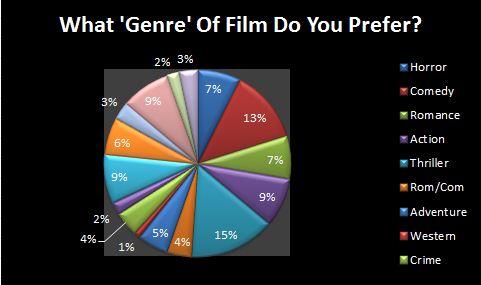 Original Questionnaire
 New Questionnaire
 Original Questionnaire
 New Questionnaire
 Original Questionnaire
 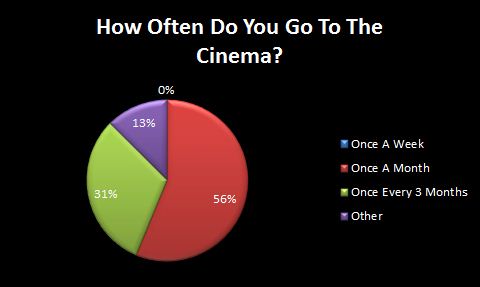 New Questionnaire
 Original Questionnaire
 New Questionnaire


 Big-Blockbusters like the TWILIGHT SAGA, they are starting to attract more infrequent cinema goers and repeated visits as they may have good reviews or previous films of the same producer or director have sold well. The more it is aimed at an audience beyond 15-25's or families or infrequent cinema goers, the more understanding it has to sustain a theatrical life.
 Distributors must compete for a significant share of 'VOICE', not only to other distributors but also other leisure activities. However small or big the marketing is, the distributor must try and reach the audience in compelling ways, in areas where they are most receptive to communication i.e the internet. This will generate an affect and which the audience must be convinced that the new film being released is a 'must see' film. One film that did this was 'PARANORMAL ACTIVITY'


 Merchandising


