Showing posts with label G: Assignment 5: Animation. Show all posts

Friday, 3 January 2014

The Requirements Of Working To A Brief

Briefs and Commissioning

A brief is document (most likely) that has a set of instructions telling an individual what to do in order to carry out a task or job. When getting a brief you first must be commissioned. Being commissioned means that you as an individual have been employed or instructed to carry out a job to which you will be given a brief so that you can follow the guidelines of what the commissioner wants out of you and your skills. When opportunity comes around you can pitch ideas for that brief. Some briefs may be more relaxed and easy and will require you to develop your ideas amongst other clients, like a competition. This is also known as 'tender brief'. Besides responding to a brief through a legal document, there are other ways you can respond to a brief. One way would be through a competition. Some competitions require you to follow certain guidelines, quite like a brief, in order to enter the competition. One example could be the E4 E-Sting competition. One requirement states that the E-Sting must be 10 seconds long in order for it to be submitted, it can not be longer or shorter.

'Radar Music Videos' - This online service helps directors, producers, labels and artists with their commission in music videos at affordable budgets. The service is free but has a small subscription fee for directors.

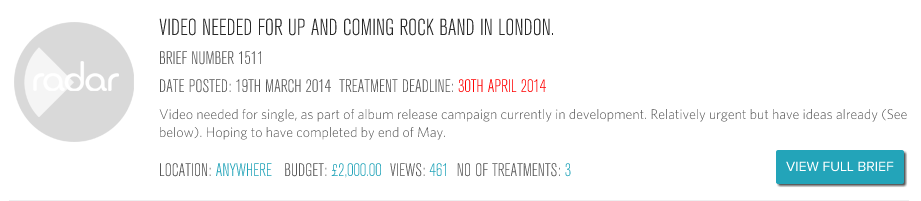
Example Of A 'Radar Music Video' Brief - Requires a music video to be created for a new up-coming rock band in London. The budget is £2.000.00 and has already had 3 treatments (updated 17/04/2014).


Assignment Brief Example For Stop-Motion Animation E4 E-Sting - BTEC Diploma In TV and Film.


Reading A Brief

As explained in the previous paragraph above, reading a brief is a like reading a bullet-point document clearly telling you what is expected by the commissioner that handed you the brief. It is used as a guide to help you through your task or job. Using the E4 competition again, one of the requirements for the competition is that you had to include the E4 logo within your E-Sting. This could either be implemented in the world of the video or added on as a picture (.jpg). This was provided by the E4 E-Sting website. No other logo was allowed to be used in the video unless the client obtained permission to use it. For example I used an 'East Norfolk Sixth Form College' T-Shirt / logo in my E-Sting which was allowed to be used as I obtained permission. When it came to my own project, understanding the E-Sting brief was not that difficult as it was presented in a competition form, giving simple and clear instructions.


Negotiating A Brief

When it came to the E4 E-Sting project that was set by my teacher, I made sure that I knew what I was doing and was able to discuss any problems if I was stuck or needed help to anything within the brief. Within the media industry it is good to ask so that you fully understand what is expected from you. It can also help with what the commissioner doesn't want, giving you a better path to follow within the task. When it came to interpreting the brief, if something was asked from you, your skills may be challenged in order to get what the commissioner wants. For example if you were ask to make a 30 second advert of a jar of jam, the contents of that advert might come from your personal skills. However there may be some instructions / guidelines to help you. Researching into the company that gave you the brief could help in understanding what the commissioner wants out of you. For example you could research into their new releases or previous work.

If you were asked to make this 30 second advert, you may hit some legal, ethical or regulatory issues. For legal you must try and not use any other companies logo, music etc without their permission as you will most likely get sued and a lose out on a job. 

The copyright law of the UK states that "the law gives the creators of literary, dramatic, musical, artistic works, sound recordings, broadcasts, films and typographical arrangement of published editions, rights to control the ways in which their material may be used". This means that E4 have control over their products and organizations and can give the permission to use their products like logos. It also states "Names, titles, short phrases and colours are not generally considered unique or substantial enough to be covered, but a creation, such as a logo, that combines these elements may be". This means if a logo was used without permission and is not your original creation then it can lead to legal action.


The copyright service website states that "a trademark can be a name, word, slogan, design, symbol or other unique device that identifies a product or organisation". These can be trademarked from putting a small 'TM' logo somewhere on the product. Some names / logos may also have a small 'R' imprinted at the end to show that that name / logo has been registered and can't be used by anyone else except the company that created it. For example the 'Call Of Duty' video game franchise uses the 'R' symbol so that no other company can use it and to also show that the name has been registered.   

For ethical using any 'over-the-top' explicit or offensive content could result in some serious issues and again could result in a loss of a job. When it came to my E4 E-Sting project, I made sure that my idea had no legal or ethical issues, so that I met the brief with no problems. This then helped me with time management as no time was wasted on solving these issues. For example the E4's guidelines for the E-Sting quotes that "We can’t show anything explicit or violent in the daytime, but we might be able to after the watershed as long as it’s broadcastable. So – within reason – your idea can be quite naughty / irreverent / provocative and the like. Use your common sense though; anything too grim or sexually explicit won’t get shown at all".

Also the Ofcom Broadcasting Code states that I cannot  "glamorizes violent, dangerous or seriously antisocial behavior" that is "likely to encourage others to copy such behavior". By understanding these regulations, I made sure that my E-Sting did not show any kind of glamorized violence or antisocial behavior.

Once my project was completed the only things I needed to amend were in post-production (some pictures I took needed editing in lighting, contrast etc.) Within the media industry the final product may not be satisfactory for the commissioner and you may be asked to either start again or try and amend the work. This can be pain staking for the you as a worker. However during the task given, you may need to amend the work yourself. This could be due to things like budget (not being able to afford certain releases, equipment, props etc.) or conditions to the contract (restrictions to what you can and can not do). This is common in the industry because when you are given a brief, the commissioner wants something specific from your skills and will need to set restrictions and budgets so that time is not wasted. Again, asking what your budget is could result in avoiding this issue.

Opportunities

When someone is offered a brief, there are plenty of opportunities at which the employee can undertake. For example when taking on a brief to create a 30 second advert, the opportunities to improve your directing, production (pre - post), and camera skills are there. Also payment can be implemented within a contract / brief which is another reason why someone would undertake a task and respond to a brief. Working with a brief can also help in improving your skills with working within the industry and working with a brief itself. When it came to my E4 E-Sting project, I had loads of opportunities to improve my skills in camera work, time management and production to which I did achieve. When working on the project, I had to use most of these skills at the same time (directing and camera work). When completing the project and referring to the brief I noticed that I contributed to all of the requirements for the E4 E-Sting competition. The video for exactly 10 seconds long, I made sure that I used the E4 logo in the video and made sure that I showed creativity and originality.


References

Assignment Brief For Stop-Motion Animation E4 E-Sting - BTEC Diploma In TV and Film Picture- http://btecmediaen2.blogspot.co.uk/2013/09/assignment-5-brief-working-to-brief-and.html
Interpreting A Design Brief Video - http://www.youtube.com/watch?v=zrfCXLEQpE0
E4's E-Sting Competition Rules - http://estings.e4.com/competition

Monday, 16 December 2013

Evaluation Of My E4 E-Sting


Introduction / How I Exhibited My Work

Once my E4 E-Sting was completed I was asked to exhibit and distribute the video along different network sites. The sites I have used for my E-Sting is Blogger, Facebook, Twitter, YouTube, and Microsoft Outlook. This allowed me to expand my audiences in order to get a diverse response. I also created a questionnaire and sent it along all of the websites shown above, which again allowed me to expand my audience research. Within my questionnaire I made sure that I covered the following: 
  • Genre and Audience
  • Content and Narrative
  • Aesthetic Qualities
  • Creative Qualities
  • Technique and Technical Qualities Used
  • Style (Stop - Motion)


Methods Of Exhibition

When evaluating my audience responses I have decided to present it in a essay format, showing pictures from my results to make it an comprehensive piece of evaluation by giving images and explanation. It makes it more presentable for readers. I find it easier as the reader can see what I am seeing, making my evaluation more understandable to the reader.

Besides exhibiting my E-Sting on social websites like YouTube, Facebook and Twitter, there were others way I could of got my video seen. One example would be burning it onto a disk and distributing it to people of all ages and genders so that the audience demographic and physcographic is widened.


Another example is showing it on TV's at which people from all kinds of demographics would see it. One example in the Norfolk area (where I live) would be Norwich City Center which is home to a huge screen that hangs over a shopping mall. With people walking in and out of the shopping mall, they would witness the E-Sting giving them viewing pleasures. Expanding my exposure.


A focus group would also be another great example to exhibit my E-Sting as it would be a good way to show the E-Sting to a specific demographic and collect the feedback straight away so they are fresh and quick, allowing me to make any immediate improvements.

All of these methods could of increased my chances in obtaining a wider demographic which could of increase my quality of the results. This would then give me a better understanding on what people really thought of my E4 E-Sting.


Responses From Questionnaire


When carrying out my audience research I wanted to make sure I had a wide age audience. By doing this I asked a set of questions with the answers under 15, 15 -18, 19 - 29 and 30+. This allowed me to see what age group would see and enjoy my E-Sting.

My results showed that I have asked more people of the age range 15 - 18 (60%), than people who are 19 - 29 (20%) and 30+(20%). I asked a total of 10 candidates.

Looking through my results in detail I have noticed that the majority of the candidates who answered the appropriate questions are Males how are aged 15 - 18.

From looking at all of these factors it can show that mostly Males who are aged 15-18 liked my E-Sting and found it more interesting compared to other candidates.

From looking at the results we can see that most of the candidates were possibly Male (50%). However 25% of Females also participated in the questionnaire. At the end I was left with 20% of candidates not specifying their gender.

This made the results some what unreliable as I could of asked an equal amount of demographics genders. Maybe next time I will ask 10 Males, and 10 Females. Therefore making my results reliable and valid.
5 / 10 of candidates that answered this question all knew that the video was stop - motion animation (SMA).

There are good and bad points to this. The good points are that everyone understood what the video involved, technique wise, making them appreciate the idea used. However, not everyone answered the questions which again gave me unreliable results.

Also the results don't say if these candidates knew about stop-motion to begin with. Next time I might add a question asking if they know what stop-motion is to get a better understanding from my results.


'Who do you think this video is made for (the audience)?'

From looking at my results in my questionnaire, I have learnt many things about my E4 E-Sting. One would be that some people think that the video is aimed at 'young teens' or 'C4 Viewers' (Female aged 30+), which in theory is what I was aiming for. Others also said that 'older teens' (Female 15-18) would be interested in this E-Sting as it involves images of teens and could also appeal to 'creative teens' (Female 19-29). Predominantly it was the females who noticed it was made for teens but were unable to explain why. I believe this was because there wasn't a question asking 'why' which is a suggestion that could be implemented into my next project. However I was happy with the results of candidates noticing that the main demographic was teens (aged 15 - 18).


'Do you find the video entertaining and why?'

From looking at my results I have noticed that most people found the video very entertaining to watch due to factors like creativity and originality. Some candidates quoted that they liked the video because it was 'short but snappy' (Female 30+), which was a one of the things I was going for. I like the fact that some candidates said that the idea was 'original and interesting to watch' (Male 15-18)  as it made me more proud and happy with the final result, as originality was noticed. The idea used was also commented with people saying that it was 'both complicated and simple but gets the message across in a quirky way' (Male 15-18). Being an 'Inception' type of idea, I really tried to 'wow' and complicate my audience. However there was one person who didn't enjoy the E-Sting to reasons that were unspecified.


'What Genre do you think the video is?'

The majority of candidates that took part in the questionnaire said that the genre for this video was 'Comedy' (Male and Female, aged 15-18, 30+) due to things like facial expressions. During the production process I made sure that we pulled funny faces to make the video comical to the audience, portraying a comedy genre. However others said that the genre could be 'animation' (Female 19-29), 'experimental' (Male 15-18)  and 'horror' (15-18). From looking at these results I agree that there are some elements of comedy and thriller. The funny faces add to the comical feel to the video, however the idea of the pictures going into one another gives the video a thriller feel to it. One of the candidates also quoted that there might not be a 'predominant genre but hints of comedy' (Male 15-18).  All in all I was happy that most candidates caught onto the comedy side of the video as well as other genres.

'Do you see any creative qualities?'

When looking at my results from my questionnaire, I noticed that some candidates did notice some creative qualities within my E-Sting. Some people quoted on the editing saying that it 'works well' (Female 30+) which was a main skill that I was hoping to achieved or improve. However, knowing how to edit it was considered before shoot, as the process in this Stop-Motion idea was very tedious. The faces again were mentioned saying that they were 'amazing' (Male 15-18).  The amount of effort put into this idea was huge and has been one of the hardest piece of work ever as it had a lot of thought and planning put into it. This was commented in my results saying that they 'really liked the time and effort gone into this. It shows imagination' (Female 19-29).  The word 'professionalism' (Male 15-18) was used which really made me appreciate my efforts in making the E-Sting even more.

'Do you see any aesthetic qualities (does it look appealing)?' 

When collecting my results for this question, I noticed that most candidates commented on the colour scheme. With the lack in lighting and resources, it was hard to get the correct lighting, however the final results turned out good in terms of getting the right effect. One candidate quoted that they liked the 'consistent use of purple' (Female 30+).  This was good as I wanted to express the purple to show that the Mise-En-Scene was linked to E4. However one candidate quoted that it was 'quite dark for an E-Sting' (Female 15-18). In this comment this person was commenting on the amount of lighting within the frame. Again the access to resources was short, decreasing the opportunity to get better lighting. I think that some of the E-Sting was too bright and could of been edited in post. One thing I was trying to attempt was too keep the background as simple as possible so that the subject in the forefront was focused on. This was commented on in my results with one candidate quoting that the 'background is really simple' (Female 15-18).

Too Dark:


Too Bright:


'Do you see a narrative (a story)?'

When coming up with idea, it didn't really have a strong narrative to it, besides the 'Inception' effect. Some candidates that took part in the questionnaire noticed this, with some saying there could be a narrative adding onto the fact of identifying themes. This candidate quoted that there is evidence of 'friendship and fun' (Female 19-29). The rest of the candidates simply answered that there was no narrative evident. Maybe in the future projects I could try and implement some sort of narrative but going beyond the boundaries is more important to me than the story.

'Any comments on the technique or idea used?'

I wanted to ask this question last to see what people thought of the technique used, allowing the candidate to see what they want. When looking into my results, I noticed that one candidate understood that the idea was suitable for Channel 4, as it was an alternative of identifying its target audience. This person also mentioned the programmes within the Channel 4 quoting that it 'offers a range of programming catering to a range of audiences' (Female 30+). Essentially this is what I was trying to achieve by reaching out to my target audience. By adding teenagers to the E-Sting it allowed the teenage demographic to enjoy the video even more. This then helped in promoting the kind of programmes that could be seen on Channel 4 and E4 itself. In this case most programmes on E4 are targeted at teenagers, giving the E4 E-Sting an appropriate feel to it. With this inspiration coming from 'Vine' the idea of pictures going into one another has been used before. However some candidates noticed this and quoted that it was 'executed' (Male 15-18) very well. Because Channel 4 is a very high budget television channel, this candidate noticed the low budget, but effective, E-Sting which was a big contrast to what audiences normally see on Channel 4.

Constraints

With the idea being really simple, there wasn't much constraints from achieving what we wanted to achieve. The only possible constraints that could of come from this idea was legal issues, financial difficulties and lighting. For legal issues we had to make sure that everyone who was seen on camera had signed a talent release form in order to help avoid any legal issues. This became no problem as I had access to all the appropriate paperwork. In terms of lighting and financial issues, the only problem that arose was affording good lighting. The only light source used within the video was the ones coming from the room ceiling. This then reduced the effect on the amount of lighting used. However this was not a problem as the final result turned out quite bright, leaving any dark areas to be edited within post-production.

Regulation / Guideline Quotes From E4, Channel 4 and Ofcom:

- E4: "It HAS to be EXACTLY 10 seconds long. If it's not 10 seconds long IT WILL NOT BE CONSIDERED BY THE JUDGES".

- Ofcom: "8.6 If the broadcast of a programme would infringe the privacy of a person or organisation, consent should be obtained before the relevant material is broadcast, unless the infringement of privacy is warranted".

- Channel 4: Internal Compliance Procedures - "To be effective the compliance process must include all staff involved in the making and broadcasting of programmes, online content and supporting material such as trails, press information and marketing".

"The process requires knowledge of and adherence to the rules in the Ofcom Broadcasting Code ('the Ofcom Code')".

"The following internal compliance procedures apply to all programmes commissioned by, purchased for and broadcast on Channel 4 and all its platforms, including E4, More4, Film4 and 4Seven (including all '+1' catch-up channels) and to all material published online including 4oD. It also includes all press and publicity stunts, on-air and off-air marketing and publicity stunts, where they are likely to give rise to legal or regulatory complaint".  

Time Management

In terms of keeping within the deadlines, I succeed. I did however find that it was a bit difficult as stop-motion can be tedious and if one shot is ruined, it may result in doing the whole sequence all over again. When organizing dates to shoot I made sure that everyone was available, by using social networking sites like Facebook, before setting dates. This turned out to be very successful.

Time Frame For The E-Sting:

  • Pre-Production - 14th - 22nd November
  • Filming - 25th November - 6th December
  • Editing - 9th - 13th December


Did I Meet The E4 Guidelines?

In terms of keeping to the E4 E-Sting Guidelines, I found that I kept to them very well. Within the guidelines, it states that the video must be exactly 10 seconds long in order to be considered. With YouTube adding an extra second onto our video, it became 11 seconds, however when exporting the video in Adobe Premiere Pro, it was exactly 10 seconds long. The guideline also states that the video must obtain a 10 second audio bed supplied by their website. Again, I obeyed these guidelines and used a 10 second audio bed from the E4 E-Sting's website. Another main guideline rule was the use of the logo of E4. Being integrated within my E-Sting I kept within these guidelines by providing the logo at the end of the E-Sting. One final guideline quoted by E4 is the explicit content within the E-Sting. It quotes that some forms of violence or provocative content may be shown after watershed or may not be used if it is over the top. So within reason some ideas can show a small amount of explicit content. Having none of these stated above in my E-Sting it wasn't a problem. So all in all I kept within all of the guidelines quoted by the E4 E-Sting's website.

What Have I Learned?

Taking in the lessons and the studies that I have had in class, stop-motion itself has become a great interest of mine, in terms of appreciating work that involves stop-motion a lot more. In terms of working to a brief it was a little bit difficult keeping within the E4 10 second guideline rule (stated above), as it restricted us in broadening longer ideas. However I was proud with the results in the final cut. In terms of stop-motion itself I have started to become more creative in my ideas as stop-motion can break the boundaries of reality.

Suitable For The Industry?

Giving into the practice I have had over the last year and a half, I have found working to a brief is a lot easier than doing what I plead. This is because when working to a brief, you understand and know what is expecting from you when deadline arrives, giving you a simple but working path to travel down. Also some assistance can come from a brief which can help if any problems arise.

Will I Take Animation Further?

I've loved the animation unit (live stop-motion) as it allowed me to stretch my creativity and go out of the boundaries of reality showing things that could not be possible to the human eye. It is like playing with reality by achieving the impossible. However, in terms of taking it further into the industry, I might pass. I enjoyed the unit however I want to focus on other aspects of the media industry that interest me more than animation. However this doesn't mean I will stop making stop-motion projects all together.

References

Thursday, 12 December 2013

E4 E-Sting Review Questionnaire

Please could you watch the video and then could you please fill out this short questionnaire.

Thank You!

https://www.surveymonkey.com/s/V95YCWF

Tuesday, 12 November 2013

Research and Planning: Designing an E-Sting

Questions

What format do you propose to use to create an E-Sting? (e.g, stop-frame techniques - with people/models/objects etc, claymation, time lapse photography, combined formats).

Answer - Live action stop-motion. It will contain a photo being opened up and zooming in revealing the next shot.

What will happen in your proposed E-Sting?

Answer - It will start with one person opening their bits of scrunched up paper which reveals the next shot of a person hold another scrunched up paper. Eventually it will show the E4 Logo.

Where will the animation be set?

Answer - East Norfolk College W12

Are there any limitation or difficulties to face when you produce your E-Sting?

Answer - The only limitation I can notice is getting the different people to be in my live-action video. Another is lighting. If the lighting changes, it can ruin some shots.

Who is the target audience?

Answer - The target audience is teenagers as the E-Sting will involve teens aged around 16 - 18. Also it promotes the channel itself who's main target audience are teenagers.

Tasks

For my initial location(s), I needed some where where the background was plain and the lighting was good. This would then give the characters a good focus advantage. A plain background would consist of colours like white or black. The locations picked are W12 (my media class room) and W16 (East Norfolk's Studio).

Pictures for initial location(s).


 W12 - Showing part of the face could show the characters better as well as the piece of paper.
 W12 - Showing no face could create more focus for the piece of paper.
W12 - Having a subject in against the white background, gives me an insight of how the subject will look in the shots. Having both the subject's face and the piece of paper in may show more things going on, which means more things to focus on.


 W16 - Maybe a smaller background like this would be more effective?
 W16 - Using something simple like a project screen could work, with the correct lighting.
 W16 - Because I will be moving in each shot, I will need to examine how big the room is and what is blocking my way so that the shots fit perfectly.
 W16 - Again I need to examine what is blocking my way once I start filming.
 W16 -  The white board here is blocked by a wooden structure which could affect where I shoot my animation.
 W16 - Maybe a white background could make the main subject stand out more?
W16 -  Instead of a flat background, a more ridged background could make the shot more interesting, rather than leaving it plain.


I will use music and possibly some sound effects in this E-Sting and will embed them below. I have two example that I may use. Because I don't know what one to pick, once I have edited my footage together, I will add the music and see what fits better.

Music -

Thursday, 7 November 2013

Research and Planning: E4 and the Brief

Introduction To E4

On 18th January 2001, Channel 4 launched a pay-TV companion called E4 ('E' stands for entertainment). It popular for the shows 'Friends', 'The Cleveland Show', 'The O.C', 'The Big Bang Theory', and The Inbetweeners.

E4's primary target demographic are mainly situated around the age group of 15-35. The demographic changes at different times of the day. Around six o'clock programmes like Hollyoaks and Friends are shown which attract the older audiences. The psychographic for E4 are people who find serious issues that tackle the world humorous. Because E4 is based around sitcoms there are going to be a lot of humorous behavior, depending on the shown broadcasting. For shows like the Inbetweeners, geodemographic is very important as a show like that represents the UK and is relate able to a lot of audiences living in the UK making it enjoyable to watch.


I believe that the secondary demographic for E4 would be a more mature audience as E4 can be accessed through 'Free-view' which opens up the programmes to a wider audience as 'Free-view' is free with most new TV's. A secondary psychographic for E4 could be people who enjoyed watching the programmes like 'Friends' and are known as mainstreamers, as 'Friends' they are classics that most people love. A secondary geodemographic would be people who like programmes out of their region. For example, most British audiences enjoy watching 'Friends' as well as some Americans enjoying British programmes like 'Inbetweeners'.


E-Stings

An E-Sting is a competition set up by Channel 4 to promote new and creative talent. It involves sending in short videos to E4 that would promote their TV channel, between programmes and in ad breaks. The videos have to be 10 seconds long and involve some sort of music that E4 provide. Some E-Stings are unique in their own way and, as said before, promote new and creative talent. First place will receive a £5000 reward and runner up will receive a £500 reward.  

Example One

In this example I believe the primary target audience is Syfy lovers and the secondary target audience is teenagers both male and female. I think this because the spaceships and the destruction of a city links to aliens taking over the Earth which is linked to Syfy and would appeal to mostly Syfy lovers. With the E4 spaceship landing also links to this. I believe the secondary target audience is teenagers because the way the colours are laid out and how rigged and untidy the image is gives the impression that it would only appeal to teens and not an mature audience. The one thing I like about this E-Sting is that is tires to capture the boys fantasy of aliens which can appeal to many male audiences, old and young.

Example Two

The primary target demographic for this E4 E-Sting is again young people, aged around 15 - 18. This is because of the child like blobs that shout "E" as the jump in the air. This shows that it wouldn't appeal to a demographic of people aged 30+. The primary physcographic would be people who enjoy child like humor. This is again due to the blobs that are seen to look like they have been drawn by a young child. The genre of this E-Sting is comedy, and again is due to the blobs and what they say. The content involves loads of purple blobs jumping and shouting the word "E". At the end a group of blobs jump and shape the E4 logo and shout "four!". The thing I like about this example is the child like behavior because I find it humorous and enjoyable to look at.

Example Three

The primary physcographic for this example is people who enjoy stop-motion and claymation. This is because the whole advert involves claymation which creates an incredible visual experience. We see a group of objects morphing into other different things like sheep and trains. It then ends with a whole city of clay moving on its own and are of famous landmarks like London. We then see a big clay logo of E4, which obviously promotes the TV channel. The word "E4" is continuously said throughout the E-Sting which again promotes the channel. The demographic age group for this E-Sting would probably be young people and specifically females. I think this because of the colours used like purple (can be a girls colour), and the claymation (clay associated with young children). The genre of this E-Sting is animation as it is all creative through claymation. The one thing I like about this E-Sting is how the clay starts as two small balls and ends up being this huge clay miniature of a city.

What I Have Done

The things that I have already done to respond to the brief is created a series of illusion structures. These are:

Thaumatropes:

In this task we were asked to create two circles, and draw two pictures on each side. We then attached them to a piece of string and spun them creating the illusion that the two pictures were one. 

Praxinoscope:

On this one we drew a series of pictures doing an action an placed them on a circle pallet. A mirror would them be placed onto of this pallet and the whole structure would spin. As the viewer looks through the mirror, it creates the illusion of movement.


Zoetrope:

This one is similar to the praxinoscope where we draw a set of pictures doing an action. This is them placed into a cylinder with slits in them. As the viewer looks through the slits, the illusion of movement is created.


With claymation we created small miniature figures out of clay which would have their own biography and movement. When creating the illusion of movement, we would take pictures after every movement of the miniature. From there we would put all of the pictures together in Adobe Premier Pro and exported it as a movie file. Once played back, it gave the illusion that the miniatures moved by themselves.

We also created a claymation which has the character biography below:

NAME: RALPH THE DINO
AGE: 100
OCCUPATION: PREDATOR / VEGETARIAN
MOTIVATION: LACK OF FOOD
NTERESTING TRAITS: WALKS SLOW TO SEEM LESS SCARY
NATIONALITY / RELIGION:  1000 BC


SHORT BIO: RALPH IS ALONE AS HE WAS BANISHED BY HIS T-REX FRIENDS FOR BEING A VEGETARIAN. HE NOW LIVES IN A LIFE OF EXILE AND EATS TREES TO STAY ALIVE. HE WALKS SLOW AND HAS A FRIENDLY LOOK ABOUT HIM. BECAUSE OF THE LONG TIME IN EXILE HE NOW HAS ADAPTED TO GROW FACIAL AND BODY HAIR DUE TO EATING TREES.


The finale preparation we did for the brief was a live stop-motion animation (SMA):

This one is similar to the claymation, where a series of pictures were taken and put together in Premier Pro to give the illusion of movement. In this one we give the illusion that we are flying. In every movement a picture was taken.

What Will I Do As A Final Project?

I think that I will do a live action stop-motion animation for my finale project due to many reasons. One reason is that I thought claymation was really long and so many things could go wrong like the miniatures falling apart, ruining the whole sequence. Also through live animation there are more opportunities to be creative. Also seeing how the human body can morph into different things interests me. I will be using a soundtrack provided by E4 as it is a requirement for the E4 E-Sting Competition. It states that "You HAVE to use one of the 10-second audio beds supplied". I choose the 'Brazilian' soundtrack from the E4 E-Sting competition website because it was fast paced and the energetic camera movement complemented the soundtrack.

I will be using this track:


References

Friday, 11 October 2013

Animation Research and Planning - Claymation

The Task

For our task of animation, we were asked to create clay miniatures of our choice at which we had to give a biography for each character. We were asked to create a name for the character, their age, occupation, motivation, religion, nationality and usual or interesting traits. We were also asked to create or find a set that the character would situate in to understand what they are like personally. Once they were created, we were asked to have some sort of movement to them so that when they are filmed them (took pictures), they would give the illusion of movement. The movement had to relate to their biography and their scenery.

What Went Well

When creating my clay miniature I believe the thing that went well was the idea of what I wanted to do. I created a dinosaur because their body structure is quite simply and creating it through clay seemed like a good idea. Drawing the body structure was easy however when it came to the making of the structure, that was a little different. Editing the footage was fairly easier and took no longer then 10 minutes.

What Didn't Go Well

When it came to creating the dinosaur out of clay, the weight was really off balance and the edges were some what ridged compared to an actual dinosaur. My model was seemed to fall over constantly which made it hard to finish my clay miniature. Another thing that didn't go well was the filming of my clay miniature. Sometimes some of my body would come in to shot, which concluded me restarting some shots. Also when filming my miniature, it would sometimes fall over because of the weight, which again concluded in me repeating some shots. This was very frustrating.

What I Would Do Differently

One thing that I would do differently is probably create a miniature with a simpler skeleton, and with an even distribution of weight. This will help solve the problem of the miniature falling over whilst building it up and filming its movements. Another thing I would do differently is asking for some assistants in filming as it was hard to move my miniature, making sure it stands up and pressing the capture button on the camera. Maybe with more people, it would be less frustrating.

Did I Enjoy Claymation?

Personally, I didn't really enjoy the claymation section of animation, as it takes a lot of time to create something that could become very frustrating to control. Also the skills in creating the clay miniature has to be at a good level for the clay miniature to look good. However I was happy with the final result of my 3 second claymation animation.

Monday, 7 October 2013

Character Bio For Claymation Test

NAME: RALPH THE DINO
AGE: 100
OCCUPATION: PREDATOR / VEGETARIAN
MOTIVATION: LACK OF FOOD
INTERESTING TRAITS: WALKS SLOW TO SEEM LESS SCARY
NATIONALITY / RELIGION:  100 BC

SHORT BIO: RALPH IS ALONE AS HE WAS BANISHED BY HIS T-REX FRIENDS FOR BEING A VEGETARIAN. HE NOW LIVES IN A LIFE OF EXILE AND EATS TREES TO STAY ALIVE. HE WALKS SLOW AND HAS A FRIENDLY LOOK ABOUT HIM. BECAUSE OF THE LONG TIME IN EXILE HE NOW HAS ADAPTED TO GROW FACIAL AND BODY HAIR DUE TO EATING TREES.

Friday, 4 October 2013

'History Of Animation Part III'

Introduction

In this final section of the History Of Animation, I will be talking about the forms and styles of animation, ranging from TV Programmes to Channel Indents. I will also be arguing if stop-motion has a good or bad future and will be identifying the target audience for stop-motion animation.

TV Programmes

The first form and style I will be talking about is animation on TV. Television animation have three main features:
  • Cartoons / Child Animation
  • Advertisements
  • Channel Idents

Cartoons / Child Animation

One good example for cartoons would be Pingu. Pingu uses the technique of stop-motion animation, where features of claymation are evident. Claymation has been very popular in stop-motion and is also seen in other programmes like Bob the Builder. I believe cartoon animation like Pingu is made for children as it offers a friendly look to it and has some humorous scenes. However an older audience may also enjoy the funny and creative look of cartoon claymation as it is interesting to see clay characters transform.


Advertisment

Advertisement is also uses stop-motion animation as it can enhance the visual pleasure that the gives to the viewer and can increase the interest of the thing that is being advertised. One example that can be used is the Target Dreaming Girl Commercial. Depending on what the advert is promoting, the audience could appeal to anyone. If the advert was promoting mens clothing, stop-motion techniques may be used to appeal to a male audience. For example in the advert below, stop-motion techniques are used to appeal to women as the women is the only main character in the video. Plus the video is called 'Target Dreaming Girl Commercial'.


Channel Idents

These have been created to make channels seem more interesting to the audience's visual pleasures. It is a good way for new animators to show off their skills in stop-motion and is a good way to introduce a TV programme or channel. One example is the MTV idents. The video below is a good example of an MTV ident. This ident will appeal to people who are a fan of the MTV channel and music out of general. This is because it offers creative stop-motion techniques to promote the channel and music.


Films

Stop-motion has gone as far as being in films and can range from all ages from young children to adult content, like sexual references or violence. One example I can use for one animated film is 'Chicken Run' which uses a basic claymation theme and uses stop-motion techniques. With the development in the use of stop-motion and claymation, some filmmakers have adapted to create full length films all out of stop-motion animation. Stop-motion films could appeal to many audiences like families, children, adults, animators etc; as it offers a wide range of creativity and interesting visual pleasures. For example 'Chicken Run' is comical, family friendly and has funny adult humor that some younger audiences won't understand. It also uses very effective and well done claymation which also add to the visual pleasure.


Music Videos

To make music videos more enjoyable to the viewer, some filmmakers have incorporated their skills in stop-motion into their music video projects. These can be a good way to express meaning from the song or to just increase the viewer's visual pleasure.

This example is good as it enhances the visual pleasures of the viewer as it gives the illusion that the words are appearing on screen in time with the lyrics of the song. For this video the main target audience will be people who enjoy stop-motion, the song (Drive By) and the artist of the song (Train). Also the video involves a teenager girl so could appeal to the female teen audience.


Who Is Stop-Motion Animation Aimed At?

So one question that is well asked is 'who is stop-motion animation aimed at?' Some people may say it is children due to the friendly visual pleasure it gives to the spectator, however as explained before, there have been animated programmes that are rated mature and are made for older audiences. This could be because its not the content of the animated footage but the emotion that animated footage gives to the spectator. For example the animator Adam Shaheen created the show 'Celebrity Deathmatch'. This involved animated / clay celebrities fighting to the death in a boxing arena. Some celebrities are well known to the spectator and are portrayed in a comical and 'over-the-top' way. This can be entertaining to most age groups but mostly adults. Another thing that can make stop-motion interesting to older audiences is the fact that there is an object there being moved and is seen as 'real' to the spectator.

What Is The Future For Stop-Motion

Through the years stop-motion animation has entertained and inspired many people. With the introduction of CGI, animation has a bit of competition. However some have said that seeing something that is hand made and is 'real' and is not made on a computer is better than watching something that was put together through computer generated graphics. The endless opportunities of stop-motion is what keeps it alive to many people around the world as it allows the chance to be creative with a camera and an object. With easy software and apps people have the opportunity to create stop-motion from a very low budget.

References

Wednesday, 2 October 2013

'History Of Animation Part II'

Introduction

With the increase in the illusion of animation, some people have tried to adapt their animation skills to films. In this blog post I will be talking about the developers of these animated films giving videos and photos that will back up their success. It will contrast on the animation then and the animation now. I will be talking about how they got into the animation industry and will be showing some of their work.

Willis O'Brien

Born in Oakland, California in 1886, Willis O'Brien was a big fan of the illusion of animation and was the first creator of the famous King Kong 1933 and The Lost World 1925. King Kong was one of his movies that mixed real life image against animated image. He used a budget of $5000 to create his first movie The Dinosaur And The Missing Link: A Prehistoric Tragedy. He used the basic use of animation by taking a series of pictures of a physical model and moved a certain part of the model in every frame. By doing this he was able to create these fascinating models like Kong. in 1914 he started to make short films which was the start of him getting into the animation. His main influence was animated projects created by Ray Harryhausen (well known animator and creator of 'Jason and the Argonauts').


Ray Harryhausen

Ray Harryhausen was born on the 29th June 1920 in Los Angeles, California, USA. His passion for animation started with the passion for dinosaurs and anything that related to fantasy. From the help of his parents he was able to pursue his love for animation. Learning the skills to make miniature sets he was able to develop his skills in 3D dimensional figures which lead on to him being able to create prehistoric figures. He won first prize in the Junior Museum Hobby Show by showing off his Stegosaurus (based on Knight's painting). In the early days he attempted to recreate the images of King Kong by using marionettes or string puppets. From looking through articles he found about Stop-Motion. After that he wanted to create his own stop-motion and eventually that led him to take bigger steps in better movable figures. Ray has worked with Willis O'Brien, showing off each others work, exchanging ideas, which was a big turning point for Ray as it led him to more stable animations in his models. By doing this Ray took lesson in art and anatomy at LA City College and he took film classes at the University of Southern California, where he studied art direction, editing and photography. Taking frequent trips to the zoo helped Ray understand animal's behavior. After college Ray looked everywhere for animated work and walked into George Pal, from there he joined Pal and Willis O'Brien who started on production in animation but later, Willis and Ray both left due to different reasons. From there Ray then went on to create his own creations and experimented with Dynamation. Dynamation was first seen in films like 'The Beast From 20,000 Fathoms (1953)' and was the combination of live-action footage and stop-motion. He found that split-screen was the answer.

How Dynamation Works:

  • A live-action image is projected onto a rear screen.
  • This live-action image is placed in front of an animation table with the scale model on it.
  • A glass sheet is then placed in front of both the live-action image and the animation table.
  • Ray would then make a matte line by looking through the view finder, re-establishing it with a wax pencil on the end of a stick, following the line by drawing on the glass.
  • Ray would then paint out the lower section below the line, with black matt paint.
  • Photographs of the scale model will then be taken, making them react to the live-action footage.
  • The images would then combine together by creating a second pass in the camera that would reinstate the lower previously matted out section. This would make it look like the scale model is alive in the live-action footage. 


Some Work:
  • Evolution of the World
  • It's a Wonderful Life
  • Might Joe Young
  • Jason and the Argonauts
  • Mysterious Island
And Many More...


George Pal

Another pioneer of stop-motion animation was George Pal, who's work has influenced animators of today. Born in 1908, George Pal's early days of animation was influenced by the use of Puppetoons animation that was also very popular back in its time. 'Jasper the Haunted Mansion' and 'Tubby the Tuba' are two of his Puppetoon animation series. From there he won an Oscar in 1943 which led him to making live action movies. He got a job when he left education in the famous studio of UFA. Further down the line he was signed in a long-term contract at Paramount Pictures, where he created non-advertising Puppetoons. George used the simple stop-motion technique with models, which consists of taking one picture, moving the model slightly and taking another picture. He would then put these images together to make, what looks like, a simultaneous movement.


Some of his work (unfinished or unreleased):
  • After Worlds Collide
  • Odd John
  • Logan's Run
  • When the Sleeper Wakes
And Many More...

Posthumous Collection:
  • The Puppertoon Movie


Phil Tippett

Phil was born in 1951 and is main occupation is a Director and Producer. Phil's main inspiration was Ray Harryhausen's work, 'The Seventh Voyage of Sinbad'. He went on to complete a BA degree in Art at the University of California, Irvine and then went on to work at the studio of Cascade Pictures in Los Angeles. George Lucas hired Phil to assist in the stop-motion for 'Star Wars A New Hope' and was a big turning point for Phil. In films like 'Star Wars' Phil used a similar stop-motion technique to George Pal but moving scale models slightly and taken a picture, repeated over and over again.


Has worked on:
  • Jurassic Park
  • Star Wars Saga (New Hope and Empire Strikes Back)
  • Indiana Jones and The Temple Of Doom
  • The Spiderwick Chronicles
  • Starship Troopers

How the 'ATAT' were created in 'Star Wars - The Empire Strikes Back':

  • The models were placed in front of a painted background.
  • Baking soda was used for snow.
  • High speed photography was used for the explosions.
  • Background walkers were created by using cutouts.


And Many More...

The Quay Brothers

The two identical twins, Stephen and Timothy Quay were born on the 17th June 1947 and were both into illustrating before moving on to the Royal College of Art in London. In about the 70's they started producing animated shorts. They are well known for both being Directors, Screenwriters, Cinematographers and Animators. They are both known as the world's most original film makers. Most of their work is on dolls and puppets coming to life and is seen as dark, unique and surreal. They use stop-motion to make their puppets and dolls come to life, quite similar to George Pal. After their education, they brought their own studio where they are still today creating animation.
Some of their work:
  • Street of Crocodiles
  • Institute Benjamenta
  • This Dream That One Calls Human Life
  • The Piano Tuner of Earthquakes
And Many More...


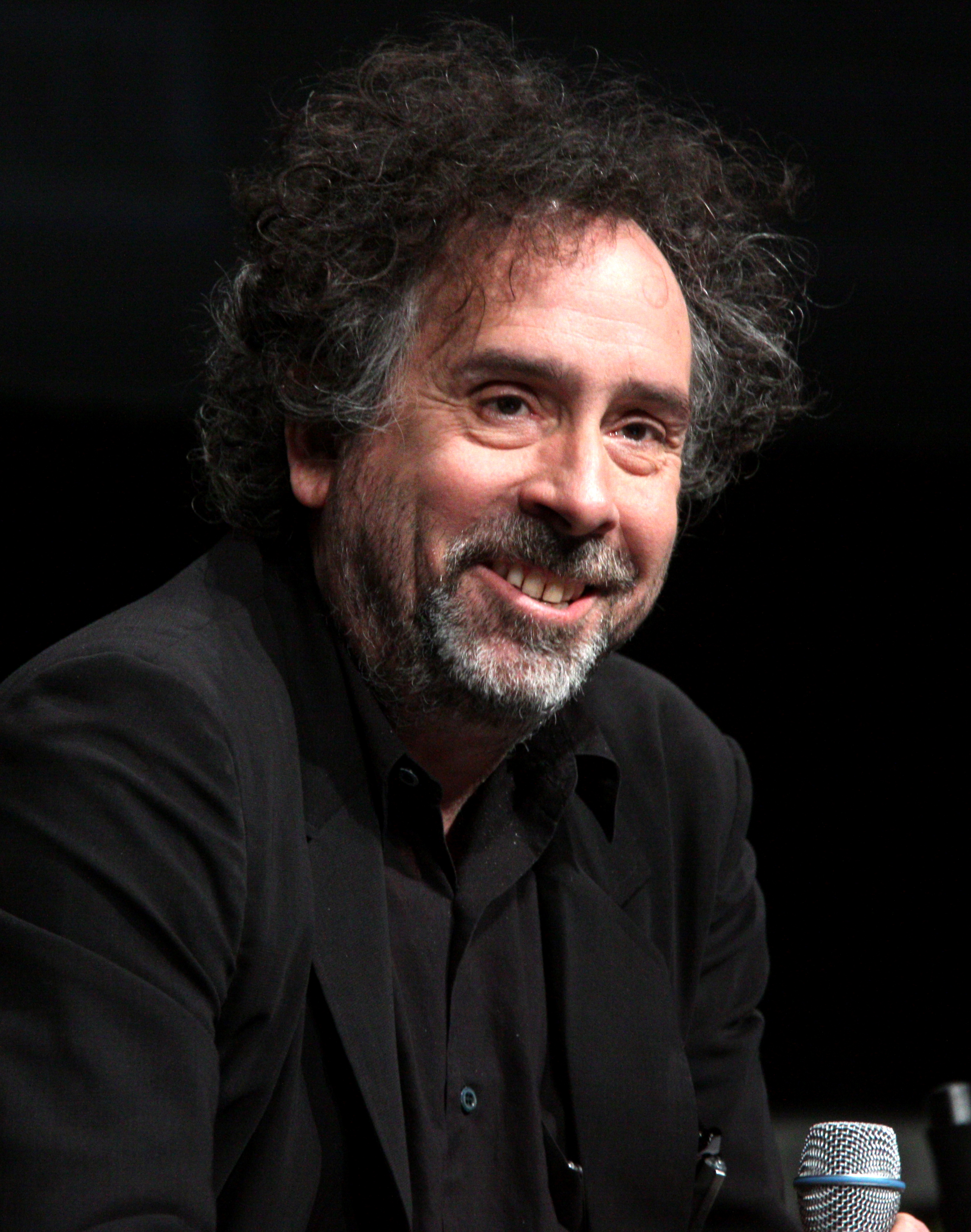
Tim Burton and Henry Selick

Tim Burton was born on August 25th 1958 and started to create short films in his backyard on Evergreen Street using techniques related to stop-motion animation. However they were without sound. Tim is well know for his dark and Gothic style of animation and was a big fan of Vincent Price and Edward Gorey and the cartoon look in general. This was due to working with Disney in his early days. As a kid he would create drawings and are seen in some of his films. Some of his drawings have inspired some people top create some of the most memorable films and characters like Edward Scissorhands and Jack. 


Some of Tim's work:
  • Nightmare Before Christmas
  • James and the Giant Peach
  • Mars Attacks
  • Sleepy Hollow (Only one scene actually used stop-motion animation)
And Many More...


Henry Selick was born on November 30th 1952 and was known and credited for directing 'The Nightmare Before Christmas', 'James and the Giant Peach' and 'Coraline'. Henry was a former classmate with Tim where they studied character animation at California Institute of the Arts. Selicks first interest for animation came from when he first saw Lottle Reiniger's stop-motion 'The Adventures of Prince Achmed' and the animated creatures from 'The 7th Voyage of Sinbad' by Ray Harryhausen.

Tim and Henry use scale models and use stop-motion to make these models come to life, taking a picture, moving the model and taking another picture.

Otmar Gutmann

Producer, Animator, and Director, Otmar Gutmann was born on the 24th April 1937 and died October 13th 1993. He is well known for his famous animated series Pingu and was the founder of the Pygos group in 1986. Through claymation, Pingu was a big success on children's television. Once he died the Pygos group collapsed and all of the assets were sold to HiT Entertainment. 52 episodes of Pingu were scheduled by HiT Entertainment, however after it ended without any announcement.

Claymation is stop-motion with clay scale models which are created using skeletons. They are then covered with clay to create a character or object. Each part of the skeleton is then slightly moved as a picture is taken. This is then repeated over and over again.


Nick Park And Aardman

Born on the 6th December 1958, English filmmaker of stop-motion Nick Park is well known for his famous animated series, 'Wallace and Gromit'. Nick started animation at an early age where he spent most of his adolescence doodling and drawing. He began filming at the age of 13 by using old filming equipment that he found in his parent's attic. Most of his famous projects like 'Wallace and Gromit' are made from Plasticine and use a stop-motion technique. When producing his films he always tried to hint some of his real life through his characters. Rumors say that the character Wallace in 'Wallace and Gromit', is meant to represent his farther or grandfarther. In 1975 the BBC decided to air his first short film called 'Archie's Concrete Nightmare'. The comic series 'Denise the Menace', 'The Bash Street Kids' and 'Lord Snooty' were the main things that inspired Nick to pick up the pen and try and copy their adventures. This is evident in his own creations of 'Wallace and Gromit'. He won many awards from his projects. Aardman Animations were also involved in the production of Nick's creations of the 'Wallace and Gromit' series. Nick Park is famous for using claymation in his work. One example is 'Wallace and Gromit'.


Adam Shaheen

The final pioneer of animation is British animator Adam Shaheen, a screenwriter and television producer born on October 13th 1964. He was the original founder of 'Cuppa Coffee Studios' which is Canada's oldest privately owned studio. Gaining a BA Hons in Photography, Adam went onto the London College of Painting. Thunder Birds and its features can somewhat be seen in some of Adam's work. His main audiences are mostly teens as his claymation animations contain sexual references and violence. Some of Adam's main skills are animation, film, visual effects, character animation, computer animation, storyboarding, TV feature films, post-production, entertainment, video production, illustration, traditional animation, art, motion graphics, pre-production, after effects 3D, video, commercials, editing, creative direction, broadcast, composting, final cut pro, concept design, production, writing, print and budgeting. Adam created over 200 commercials and won over 150 international awards.


Some of Adam's work:
  • Celebrity Deathmatch
  • Jojo's Circus
  • Starveillance
  • Bruno
  • Bruno and the Banana Bunch
  • Tigga and Togga
  • Little People
  • The Wrong Coast
  • Henry's World Season 1
  • Rick and Steve Season 1 and 2
  • Crashbox Season 1 and 2
  • A Very Barry Christmas
  • Nerdland
  • A Miser Brothers' Christmas and Life's a Zoo
  • Glenn Martin DDS Season 1 and 2
  • Ugly Americans Season 1 and 2
  • The Devils Due

References

Ray Harryhausen Film Example - http://www.youtube.com/watch?v=haDFRgTShSg
                         http://en.wikipedia.org/wiki/George_Pal
Phil Tippett Film Examples - http://www.youtube.com/watch?v=VErGD1A_iwA
Quay Brothers Film Example - http://www.youtube.com/watch?v=EgqmXK1pf7Y
Tim Burton Information - http://en.wikipedia.org/wiki/Tim_Burton
Tim Burton Film Examples - http://www.youtube.com/watch?v=khm4jztVVYo
Henry Selick Information - http://en.wikipedia.org/wiki/Henry_Selick
Nick Park and Aardman Information - http://en.wikipedia.org/wiki/Wallace_and_Gromit